
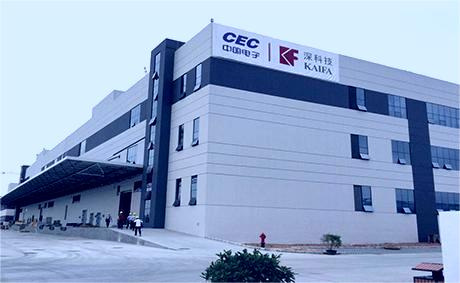
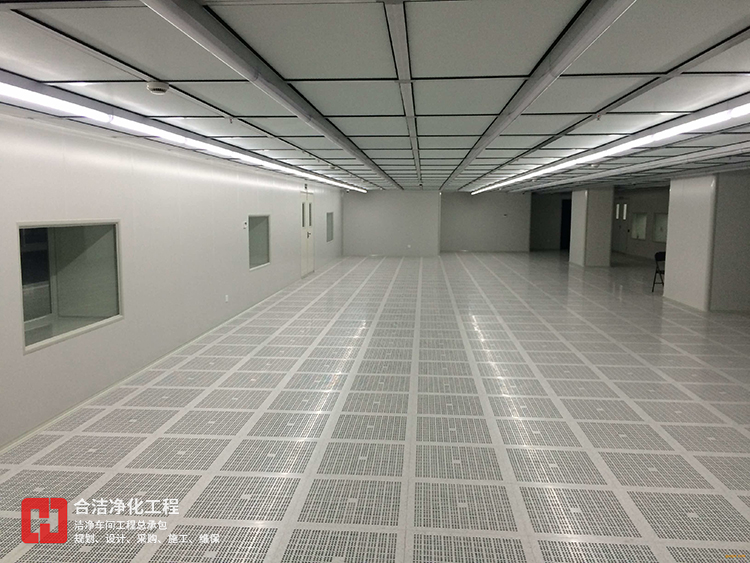
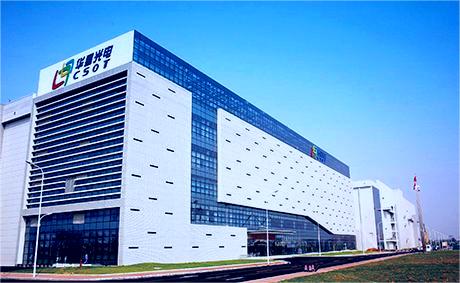
 Case of Great Wall Development Technology Electronic Device Purification Project
Cleanliness Class:Class 100
Construction method:EPC
Project address:Guangdong
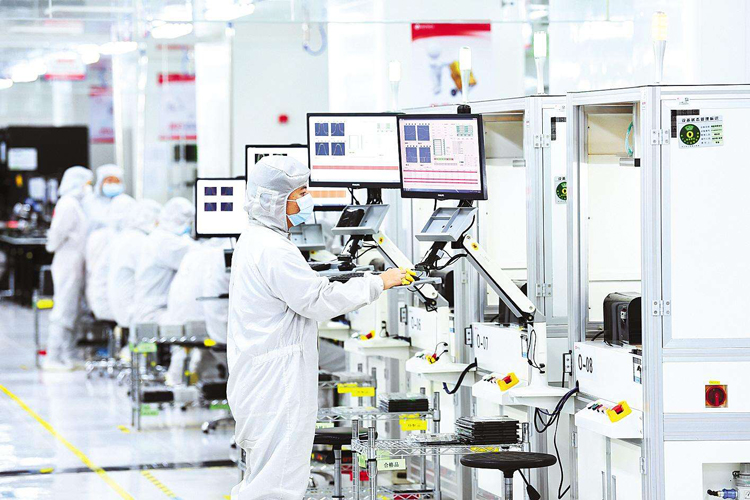
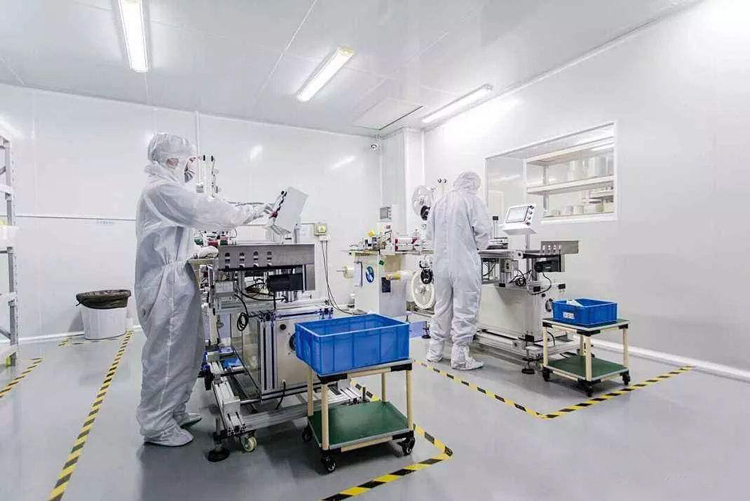
Solutions for clean shop testing in semiconductor industry
Clean room: a room in which the concentration of airborne particles is controlled. It should be constructed and used to minimize indoor particulate matter retention. Other relevant indoor parameters such as temperature, humidity, pressure, static electricity, vibration and noise shall be controlled as required. — — Extracted from Code for Design of Clean Room (GB50073-2013), implemented on September 1, 2013.
Why clean room is needed: As the size of integrated circuit components produced by the semiconductor industry is getting smaller and smaller, many components are integrated on a small chip, so it is necessary to prevent external impurity pollution sources (including dust, metal ions, various organic substances, etc.) In the manufacturing process. Because these sources of contamination can cause degradation of component performance and reduction of product yield and reliability. Therefore, the manufacture of integrated circuits must be carried out in a clean environment in order to minimize the quarantine of pollution sources and silicon wafers.
Main factors affecting the clean room
Temperature: 23 ± 1 ℃
Humidity: 45 ± 3% rh
Noise: annoyance effect, speech communication interference, affecting work efficiency, low frequency noise affecting equipment
Pressure: Positive pressure is relative to negative pressure. A clean room is a positive pressure clean room to the atmosphere, but it may be a negative pressure clean room to another room. The pressure difference between clean rooms of different grades and clean areas and non-clean areas shall not be less than 5 Pa, and the pressure difference between clean areas and outdoor areas shall not be less than 10 Pa.
Static electricity: The surface layer of the ground shall be conductive and stable for a long time. It shall be made of static dissipative materials with a surface resistivity of 1? 105Ω-1? 1012Ω, the ground shall be provided with conductive discharge measures and grounding structure, and anti-static grounding measures shall be taken for flowing liquid, gas or powder pipelines.
Vibration: the allowable vibration value of precision equipment and instruments shall be provided by the production process and equipment manufacturing department. Vibration, in particular, has a great impact on lithographic equipment.
ISO14644-1
Production area: Class 1000
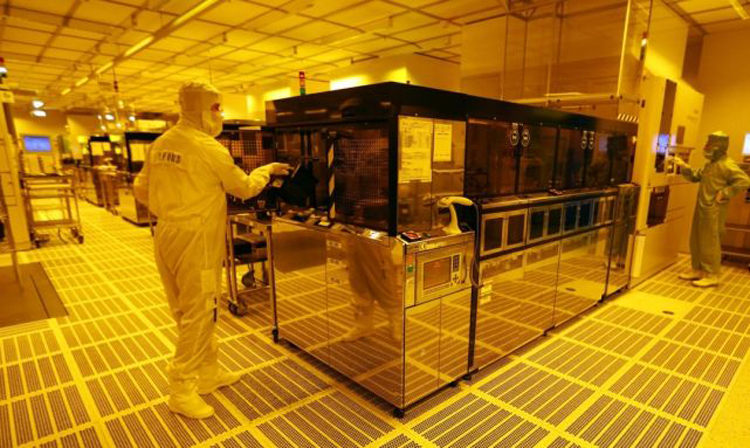
Yellow light zone: Class 100
Mask area: Class 10
How to control Particles
Usually, the generation of particulate matter can be effectively controlled by means of clothing, MAU, FFU and air shower at the entrance.
1. AMC control
Generally, AMC system consists of AMC filtration system and AMC gas quality monitoring system, which play the roles of filtration and effect confirmation respectively.
2. Illumination test
The illuminance of the clean room (area) shall be tested after the indoor temperature is stable and the light output of the light source is stable; the new fluorescent lamp area shall be used for more than 100 hours, and the test shall be carried out 15 minutes after ignition.
The illumination test point shall be selected at the height of the working face, generally 0.85m, and the passage test height shall be 0.2m; the number of test points can be calculated as one point per 50 m2 clean room (area), but not less than one point per room.
3. Static control
Real-time air quality monitoring systems are not new to the semiconductor industry. Most of the current models are based on fixed-point monitors, which are distributed at the positive pressure gas supply end, such as gas cylinder cabinets, gas distribution distribution boxes, and ventilation cabinets for special toxic gas machines.
In addition, the air flow direction in the plant is also an important reference for the location of monitors and leakage search. For example, in the clean room with the external air inlet on the air conditioning floor, the air flow direction is usually as shown in the figure below. The subfab area is most affected by the clean room operation, and the air conditioning floor is more affected by the external air. Therefore, installing gas monitors at the air inlet and the subfab area can effectively clarify the relationship between air pollution in the clean room and the outside air. Furthermore, for factories with a return air zone sandwich between Fab and subfab, a gas monitor installed directly below the process zone can immediately reflect the pollution caused by the process zone operation. For the clean room without the interlayer of the return air area, the gas monitors installed on both sides of the Subfab area can monitor the air quality conditions represented by different return air areas in different areas. Therefore, according to the air conditioning flow field design and monitoring objectives of the factory, the appropriate monitoring location and gas monitoring tools are selected.
4. Due to the length of the article, we will not elaborate more. If you need to know more, please contact the company.

0127884708


Address: No. 1F-21, 1st Floor, Tower 4&5 @ PFCC, Jalan Puteri 1/2. Bandar Puteri47100 Puchong, Selangor, Malaysia.
Malaysia Special Line:+6 012 7884 708
China Special Line:+86 186 6511 0000
 MIIT Website Recordation No.:
Chairman Guangdong ICP No. 11094277
MIIT Website Recordation No.:
Chairman Guangdong ICP No. 11094277
 Case of CSOT Purification Project

 Case of Chen Hong Technology Purification Project