
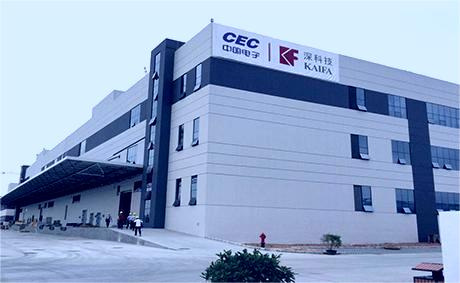
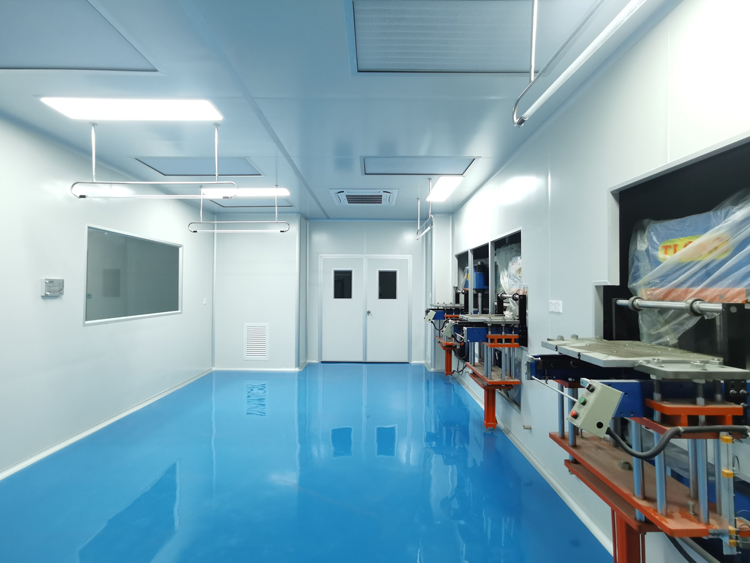
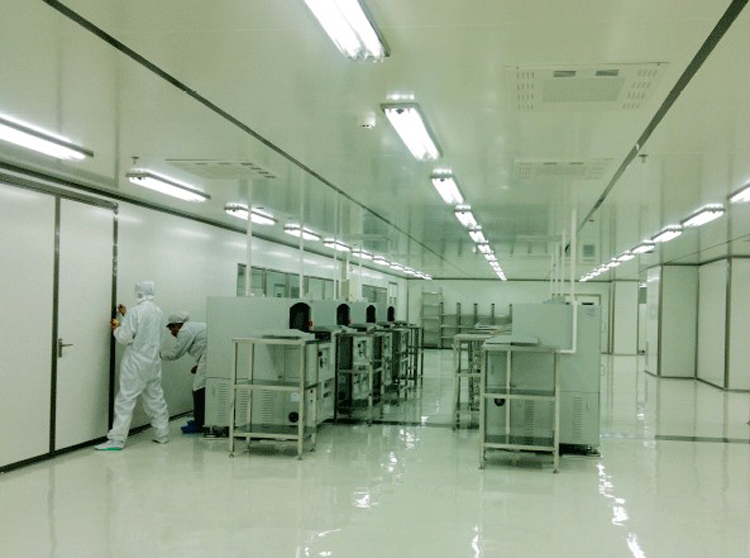
 Case of Great Wall Development Technology Electronic Device Purification Project
Cleanliness Class:Class 100
Construction method:EPC
Project address:Guangdong
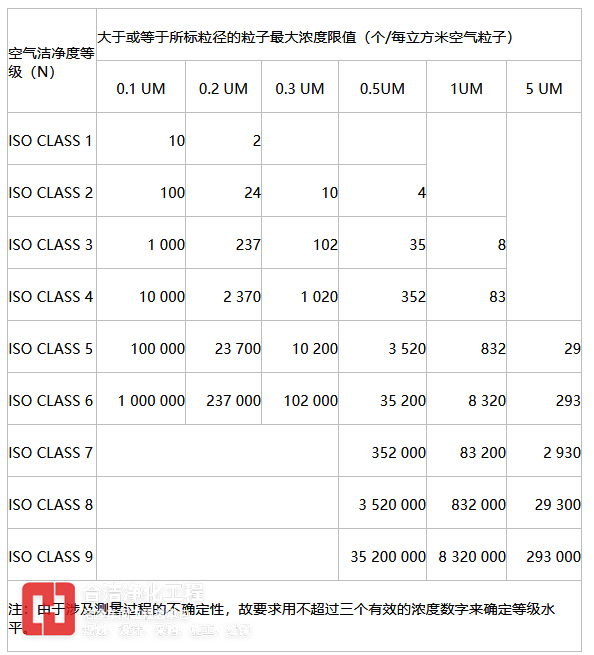
With the rapid development of semiconductor process technology, the chip line width has entered the nanometer level, and the corresponding products have higher and higher requirements for the production environment of semiconductor products. Therefore, the running state of the system in the clean room of semiconductor engineering plays an important role in the quality and throughput of silicon chips, and the clean level of the clean room must also have a recognized standard. For example, taking Class 10 as an example, it means that in a unit cubic inch of clean room space, there are only 10 particles of dust with an average particle size of more than 0.5 microns. So the smaller the number after Class, the better the cleanliness, and of course the more expensive it is.
In the semiconductor manufacturing industry, due to the sensitivity of expensive equipment and the complexity of the manufacturing process, the layout of the factory can not be easily changed, and the initial unreasonable layout will lead to huge material handling costs, ineffective production and a lot of costs required for the re-layout. In particular, the rapid development of submicron technology requires high air cleanliness in the production site. All semiconductor process equipment must be placed in a closed space to isolate dust. In this way, the overall production system can play a large production efficiency after the factory is put into operation.
According to domestic statistics, the qualified rate of MOS circuit die produced in the environment without the requirement of cleanliness level is 10% ~ 15%, while that of 64% is only 2%. At present, the application of clean room is quite common in precision machinery, semiconductor, aerospace, atomic energy and other industries. The clean room system provides a clean environment for the whole production line, which is the basic condition for the production and processing of silicon chips. In order to create a clean room environment, we not only need the multi-channel remote telemetry laser dust particle counter and remote monitoring system developed and produced by Senawi to provide users with real-time and accurate remote measurement of the number of particles and purification level of the monitored environment, but also increase or reduce control terminals according to different needs to achieve 7 * 24 real-time remote automatic monitoring. Through RJ45 network interface, WiFi, 485 (moudbus), etc., the data is sent to the PC terminal to display the cleanliness of the current monitoring environment, and the production system of the semiconductor factory is supervised according to the manufacturer and its related technology and use management methods.
1. The internal environment shall be maintained at a pressure greater than one atmosphere to ensure that the dust only goes out but not in. Therefore, a large blower is needed to continuously pump the air through the filter into the clean room.
2. In order to keep the temperature and humidity constant, large air conditioning equipment must be matched with the aforementioned blast pressurization system. In other words, how long the blower is pressurized, how long the air conditioner is turned on.
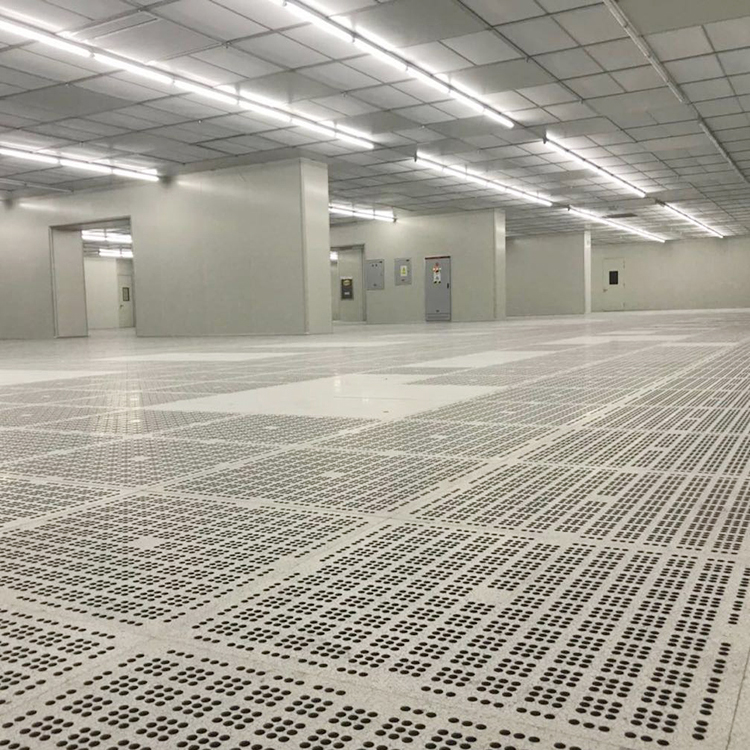
3. All airflow directions are mainly from top to bottom, so as to minimize the abrupt indoor space design or machine placement and deployment, so as to reduce the chance and time of dust stagnation in the clean room.
4. All building materials are mainly made of materials that are not easy to produce electrostatic adsorption.
5. When people and things go in and out, they must go through the procedure of air shower to remove the dust on the surface first.
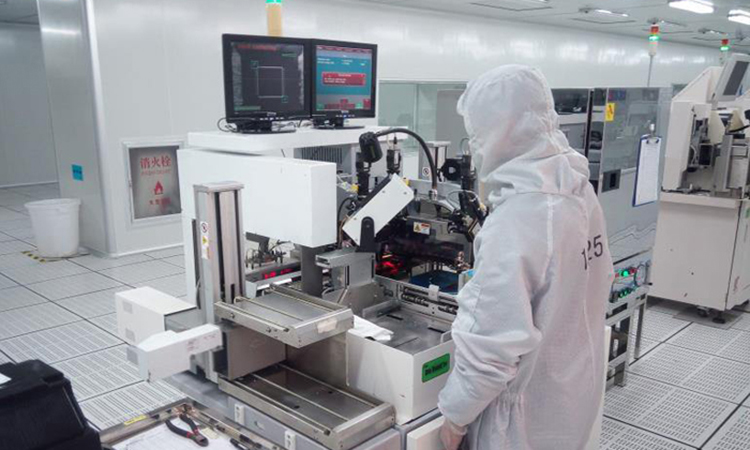
6. The dander of human body and clothing is a major source of dust, so it is necessary to strictly require the entry and exit personnel to wear dust-free clothes, except for the eyes, they must be isolated from the outside world (in the factory of sub-micron process technology, the workers are almost dressed like astronauts.
7. In addition to air, the use of water can only be limited to DI water (de-ionized water). One is to prevent particles in the water from contaminating the wafer, and the other is to prevent heavy metal ions in the water, such as potassium and sodium ions, from contaminating the charged carrier channel of the MOS transistor structure and affecting the operating characteristics of the semiconductor device. The quality of deionized water is defined by resistively, which is generally required to be above 17.5MΩ-cm. For this reason, multiple ion exchange resins, RO reverse osmosis, UV * * and other barriers are required before it can be released for use. Because di water is a good solvent and cleaning agent, its use in the semiconductor industry is staggering!
8. Nitrogen (98%) must be used for all available air sources in the clean room, including those required for drying wafers and machine air pressure. Nitrogen for drying wafers even requires more than 99.8% high-purity nitrogen!
The above eight points are the basic requirements. In addition, there are environmental protection issues such as sewage treatment and exhaust emissions, which require a large amount of construction and maintenance costs. In a word, the semiconductor production industry is a highly polluting industry. To strictly control the pollution of related enterprises, the use of clean rooms is indispensable in the semiconductor chip industry!

0127884708


Address: No. 1F-21, 1st Floor, Tower 4&5 @ PFCC, Jalan Puteri 1/2. Bandar Puteri47100 Puchong, Selangor, Malaysia.
Malaysia Special Line:+6 012 7884 708
China Special Line:+86 186 6511 0000
 MIIT Website Recordation No.:
Chairman Guangdong ICP No. 11094277
MIIT Website Recordation No.:
Chairman Guangdong ICP No. 11094277
 Case of CSOT Purification Project
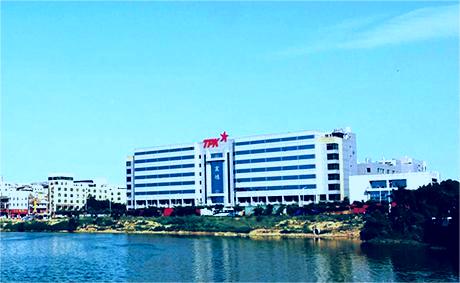
 Case of Chen Hong Technology Purification Project